Farming resources in Evony is not about clicking faster or sending more marches without thinking. Progress comes from understanding how tiles work, how march size affects efficiency, and how timing changes everything.
Players who master these fundamentals grow steadily without burning stamina or losing troops. This guide focuses on practical farming methods that work for free to play and spending players alike.
Each section breaks down one core element so you can build a routine that keeps your city growing every single day.
Understanding Resource Tiles and Why They Matter
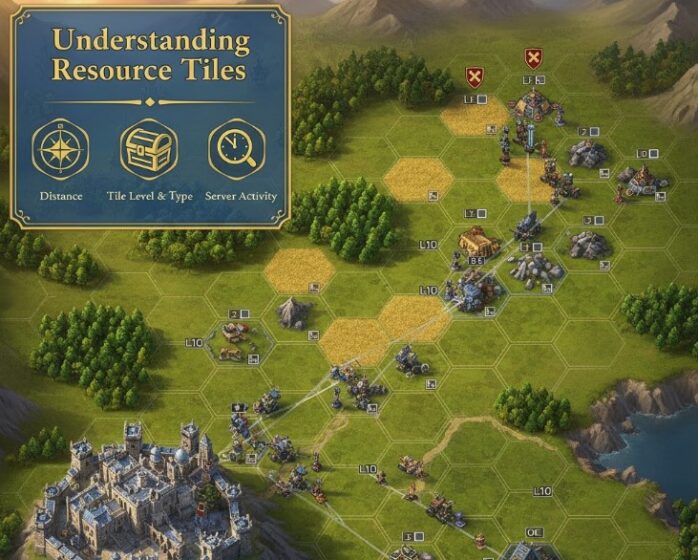
Resource tiles are the backbone of long term growth in Evony. Food, wood, stone, and ore tiles scale by level, and choosing the right one is often more important than sending more marches. Higher level tiles give better returns per hour, but they also attract competition. Lower level tiles can be safer and sometimes more efficient if you log in frequently.
A smart farming approach balances tile level with your activity schedule. Players who check the game often can benefit from shorter gathering cycles on mid level tiles. Players who log in less frequently usually gain more from high level tiles even if the march takes longer.
Key things to evaluate before sending a march include:
- Distance from your city
- Tile level and resource type
- Server activity during that time window
Choosing tiles with intention reduces wasted time and improves overall resource flow without additional cost.
March Size Optimization for Efficient Gathering

March size plays a critical role in how efficiently your troops gather resources. Sending too many troops wastes marching slots and increases exposure to attacks. Sending too few troops leaves resources on the tile when your march returns. The goal is to match your march capacity to the tile yield as closely as possible.
Each resource tile has a maximum amount that can be gathered. Once that cap is reached, extra troops do nothing. Learning approximate troop counts for common tile levels allows you to fine tune marches and free up slots faster.
A useful rule is to adjust march presets based on tile level rather than using one default setup. Over time, this creates smoother farming cycles and less idle time.
Gathering speed bonuses do not increase tile capacity. They only reduce time, so march size must still be optimized to avoid overfilling tiles.
Farming Timing and Server Activity Windows
Timing is one of the most overlooked farming factors in Evony. Resource tiles are shared across the map, and competition changes dramatically throughout the day. During peak hours, high level tiles disappear quickly and marches are more likely to be attacked. During off peak hours, players can safely target better tiles with lower risk.
Understanding your server rhythm gives a huge advantage. Many experienced players plan long marches overnight and short cycles during active hours. This approach keeps resources flowing while reducing losses.
Effective timing strategies include:
- Long marches before logging off
- Shorter cycles during alliance events
- Avoiding tile congestion during kill events
Smart timing often matters more than tile level and can double your daily resource income without any upgrades.
Using Automation Tools Without Breaking Strategy
As cities grow, manual farming becomes repetitive and time consuming. Some players choose automation tools to manage marches more efficiently while still respecting game mechanics. When used responsibly, automation supports consistency rather than replacing strategy.
A well configured Evony Bot can help maintain farming schedules, rotate marches, and reduce idle time, especially during long offline periods. Tools like this are often used by experienced players who already understand tile selection, march sizing, and timing fundamentals. The key is using automation to execute a plan, not to guess one.
Automation works best when:
- March presets are already optimized
- Tile priorities are clearly defined
- Activity windows are planned in advance
Used correctly, automation supports growth without removing the need for strategic thinking.
Tile Levels vs Risk Management
Higher level tiles offer better rewards but also carry higher risk. Many players assume that farming level fifteen tiles is always optimal, but that is not true in every situation. Risk management plays a major role in sustainable farming, especially on competitive servers.
A balanced approach mixes safe farming with opportunistic pushes for higher tiles. Sending marches far across the map increases exposure time, making attacks more likely. Shorter routes near your city often provide better safety even if the tile level is lower.
Consider this comparison
| Tile Level | Average Yield | Risk Level |
| Level 10 | Moderate | Low |
| Level 12 | High | Medium |
| Level 15 | Very High | High |
The best farmers adjust tile choice based on current server mood rather than chasing the highest number every time.
Resource Type Prioritization by City Stage
Not all resources are equally valuable at every stage of the game. Early cities consume food and wood rapidly. Mid game progression often shifts toward stone and ore for buildings and research. Late game development demands large quantities of refined resources and special materials.
Farming without prioritization leads to shortages that slow progress. Smart players align farming focus with immediate upgrade goals rather than stockpiling randomly.
A simple prioritization approach looks like this:
- Early stage focus on food and wood
- Mid stage balance all four resources
- Late stage target stone and ore heavily
Aligning resource focus with development goals reduces downtime and keeps construction queues active without emergency farming sessions.
Buffs, Monarch Gear, and Research Synergy
Gathering efficiency improves significantly when buffs, monarch gear, and research work together. Many players activate buffs randomly, but stacking them strategically yields much better results. Gathering speed buffs are most effective on long marches where time savings add up.
Monarch gear with gathering bonuses should be equipped before sending marches. Research upgrades further amplify these effects and reduce the need for oversized marches.
Important synergy elements include:
- Activating buffs before long sessions
- Switching monarch gear before farming
- Researching gathering speed early
Gathering speed bonuses reduce time but do not change tile capacity. Matching march size still determines efficiency.
This synergy approach turns average farming into a reliable and predictable resource engine.
Common Farming Mistakes That Slow Progress
Many players farm actively but still struggle with shortages. The issue often comes from small inefficiencies repeated daily. One common mistake is sending full marches to low level tiles, which locks slots unnecessarily. Another is ignoring timing and losing marches during busy server periods.
Other frequent mistakes include forgetting to refresh buffs, overvaluing distance tiles, and farming without clear upgrade goals. Each mistake alone seems minor, but together they significantly reduce progress over time.
Correcting these habits leads to noticeable improvements within days. Efficient farming is rarely about doing more. It is about doing fewer things correctly and consistently.
Conclusion
Efficient resource farming in Evony depends on understanding tiles, optimizing march size, and choosing the right timing.
Players who plan their farming routine grow faster with fewer losses and less effort. By aligning tile choice, risk management, buffs, and tools with clear goals, farming becomes a stable foundation rather than a daily struggle.
Mastering these fundamentals keeps your city moving forward at every stage of the game.