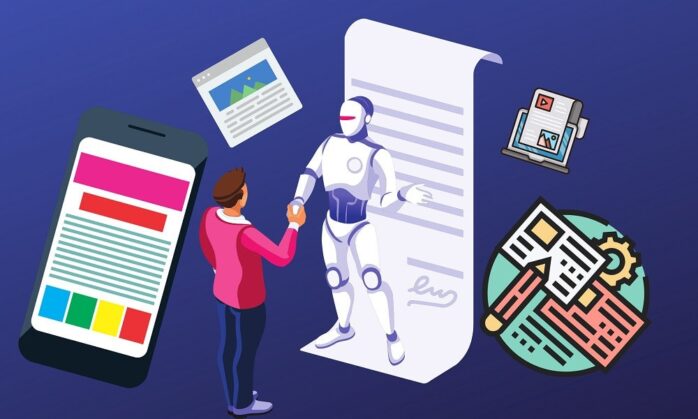
Distinguishing between human-written and AI-generated content is crucial for ensuring authenticity and quality.
Here are key methods to help you determine if a piece of content was crafted by a human or a machine.
1. Analyzing Writing Style

Humans often exhibit varied writing styles. They use idioms, metaphors, and cultural references that reflect their experiences and personalities.
AI, despite its advancements, tends to produce more uniform and predictable text. Look for inconsistencies in tone, a lack of nuanced expression, or an overly polished and repetitive style. There is also a simple solution to try, with AI detector.
2. Checking for Contextual Understanding
Humans excel at understanding context. They can interpret and incorporate subtle nuances, cultural references, and complex emotions into their writing. AI, on the other hand, may struggle with these aspects.
Content that fails to grasp the broader context or misinterprets nuanced topics might be AI-generated. Pay attention to how well the content aligns with the subject matter and whether it demonstrates a deep understanding of the topic.
3. Examining Sentence Structure

AI-generated content often exhibits specific patterns in sentence structure. Machines tend to produce sentences that are grammatically correct but lack the variability found in human writing. Look for a consistent use of simple sentences or a predictable structure. Human writers, in contrast, use a mix of sentence types and lengths to create a more dynamic flow.
4. Identifying Repetitive Phrases
One common characteristic of AI-written content is the repetition of certain phrases or keywords. AI models, especially those optimized for SEO, might overuse specific terms to meet keyword density requirements.
Humans generally strive for variety and naturalness in their writing. If you notice the same phrases being repeated without adding significant value, it might indicate AI authorship.
5. Evaluating Creativity and Originality

Creativity is a hallmark of human writing. Humans can produce original ideas, unique perspectives, and imaginative narratives. AI, while capable of generating coherent text, often lacks true creativity. Content that feels formulaic or derivative may be AI-generated. Assess whether the piece offers fresh insights or if it merely rehashes existing information in a slightly different way.
6. Testing for Emotional Depth
Humans write with emotion, infusing their work with personal experiences, feelings, and perspectives. AI can mimic this to some extent but often falls short in conveying genuine emotional depth. Evaluate whether the content resonates on an emotional level. If it feels flat or fails to connect with the reader emotionally, it might be the work of a machine.
7. Cross-Referencing Facts and Data
AI systems can generate text based on vast amounts of data, but they might not always verify the accuracy of the information. Fact-checking and cross-referencing data points in the content can reveal discrepancies. Human writers typically ensure the accuracy of their information and provide sources or citations. Lack of credible references or factual errors can be a red flag for AI-generated content.
8. Using Detection Tools

Several tools and software can help identify AI-written content. These tools analyze text for patterns and characteristics typical of AI generation. While not foolproof, they can be a useful supplementary method for distinguishing human from machine-written content. Tools like GPT-2 Output Detector and Copyscape can provide additional insights into the origin of the content.
Last Words
By employing these methods, you can better determine the authorship of the content you encounter. As AI continues to evolve, staying vigilant and informed will be key to maintaining the integrity and authenticity of the written word.