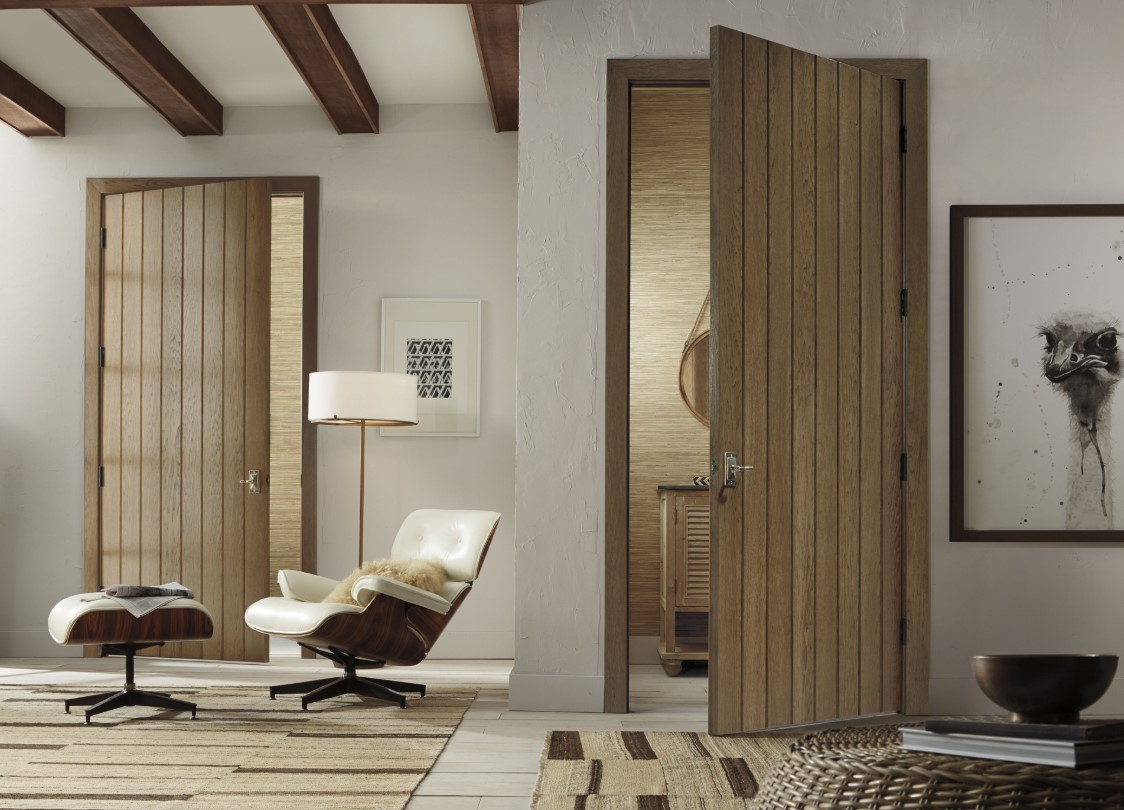
When you try to coordinate doors, wall panels, and furniture, the mistake most people make is treating them as separate layers. In reality, they are part of one system. If they don’t relate to each other, the space feels fragmented.
A well-resolved interior works because everything shares a consistent structure. That includes proportions, materials, and alignment. Interior design principles like harmony and proportion are not abstract ideas. They directly affect how these elements sit together in a room.
The goal is not to make everything identical. It is to make everything feel like it belongs to the same framework.
Start with the Architectural Grid
Before thinking about finishes or colors, focus on alignment. This is the foundation that holds everything together.
Doors, panels, and furniture should relate to a shared set of lines. These lines can be vertical, horizontal, or both. For example, the top of a door frame can align with the height of wall panel divisions. Furniture edges can follow the same logic.
This is not about decoration. It is about structure.
A simple way to think about it:
- Door heights should match or relate to panel heights
- Panel divisions should follow consistent spacing
- Furniture edges should align with architectural lines where possible
Alignment reduces visual noise and creates a calm reading of space.
Even small misalignments can disrupt the balance. Designers often use alignment to create cohesion because the eye naturally looks for order.
Use Consistent Materials Across Elements
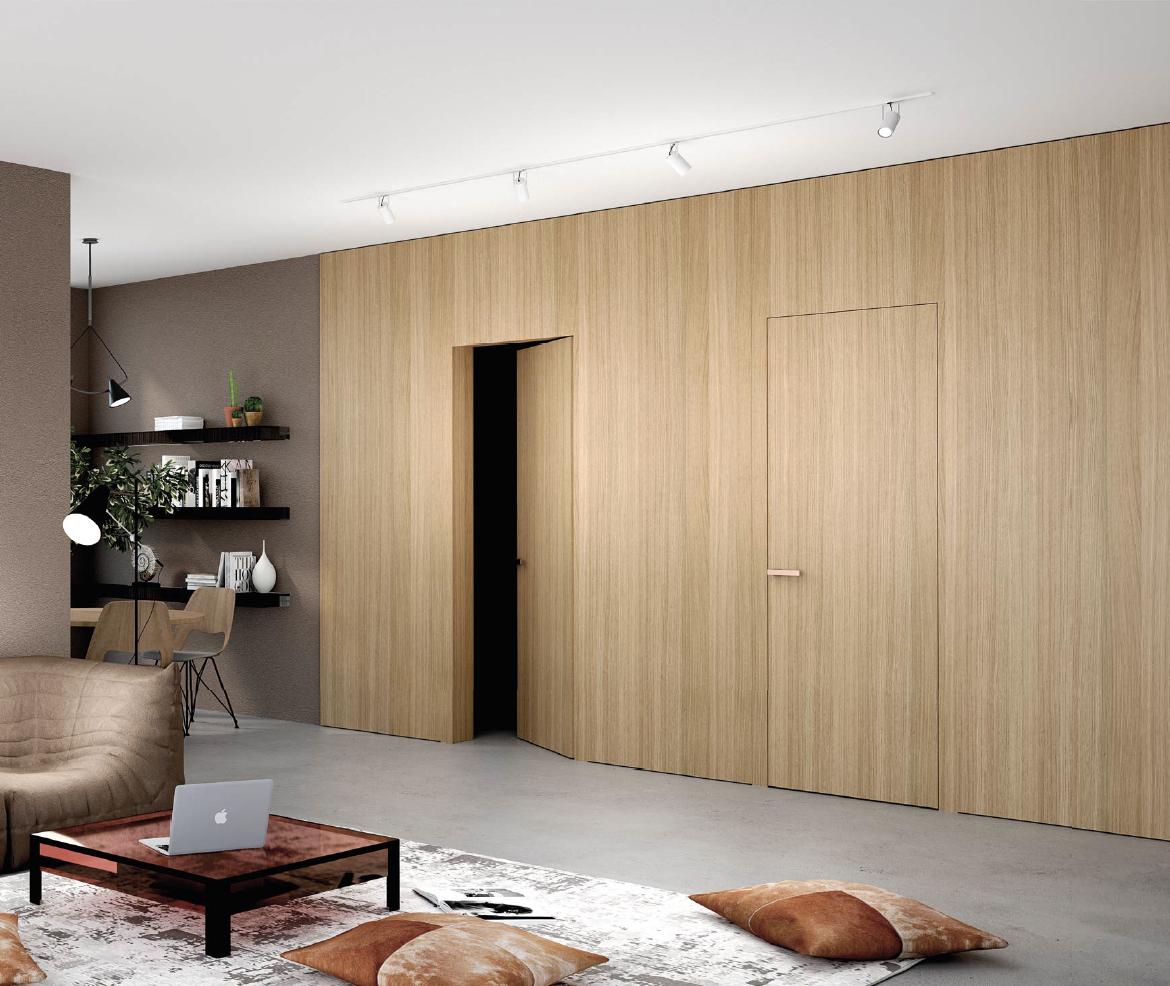
Once alignment is set, materials do most of the work. Repetition is what connects separate elements into one system.
For example, if you introduce oak in the doors, consider using the same tone in wall panels or furniture. This does not mean copying finishes exactly. It means keeping a controlled palette.
This is where details like luxury interior doors become important. When doors are designed as part of the overall material strategy, they stop feeling like inserted objects and start reading as part of the architecture.
Material consistency creates harmony, which is essential for a unified interior.
Control Proportions Carefully
Proportion is one of the most overlooked aspects, but it is critical. Doors, panels, and furniture must relate in scale.
If one element is oversized or undersized, it breaks the balance. This is especially visible in:
- Door width compared to wall panel modules
- Panel size relative to ceiling height
- Furniture height in relation to panel lines
A useful reference is that proportion and scale help elements feel visually stable and connected within a space.
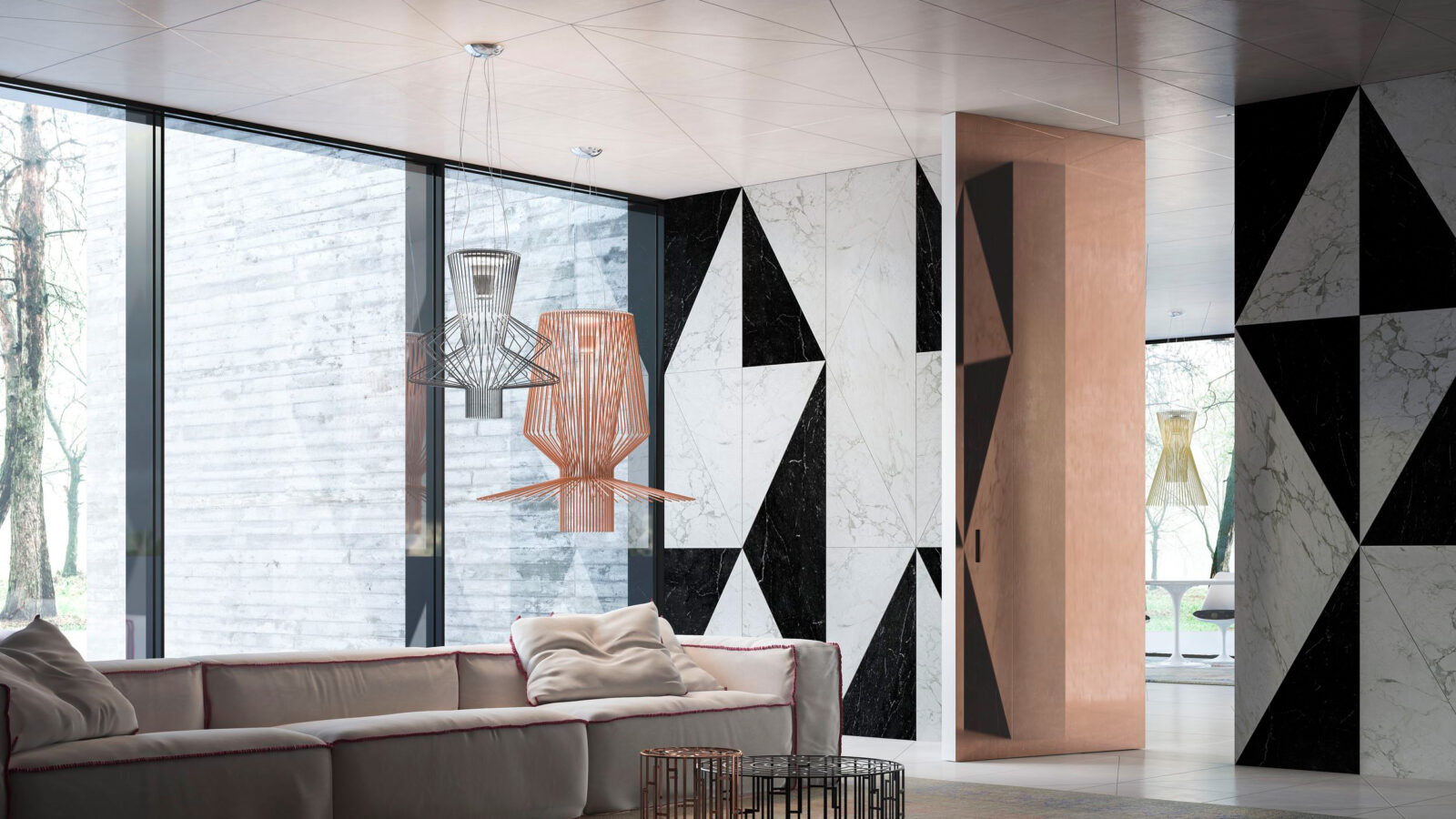
Example of proportional coordination
|
Element |
Recommended relationship |
| Door height | Align with full panel height or a clear division |
| Wall panels | Use consistent module width |
| Furniture | Keep within panel grid or align with joints |
When these relationships are clear, the room feels structured without needing extra decoration.
Balance Visual Weight Across the Room
Even when materials and proportions are correct, the space can still feel off if the visual weight is uneven.
Doors, panels, and furniture all contribute to how heavy or light a space feels. Large, dark elements carry more visual weight. Smaller or lighter elements feel less dominant.
To keep balance:
- Distribute heavier materials evenly
- Avoid concentrating all dark finishes on one side
- Use lighter furniture to offset strong wall treatments
Designers often describe this as managing visual weight to maintain comfort and cohesion in a room.
Quick check
If one side of the room feels heavier than the other, something is misaligned in your composition.
Think in Zones, Not Objects
Instead of placing furniture randomly, consider how it relates to architectural zones.
A room naturally divides into areas based on movement and use. Furniture should reinforce these zones, not disrupt them.
For example:
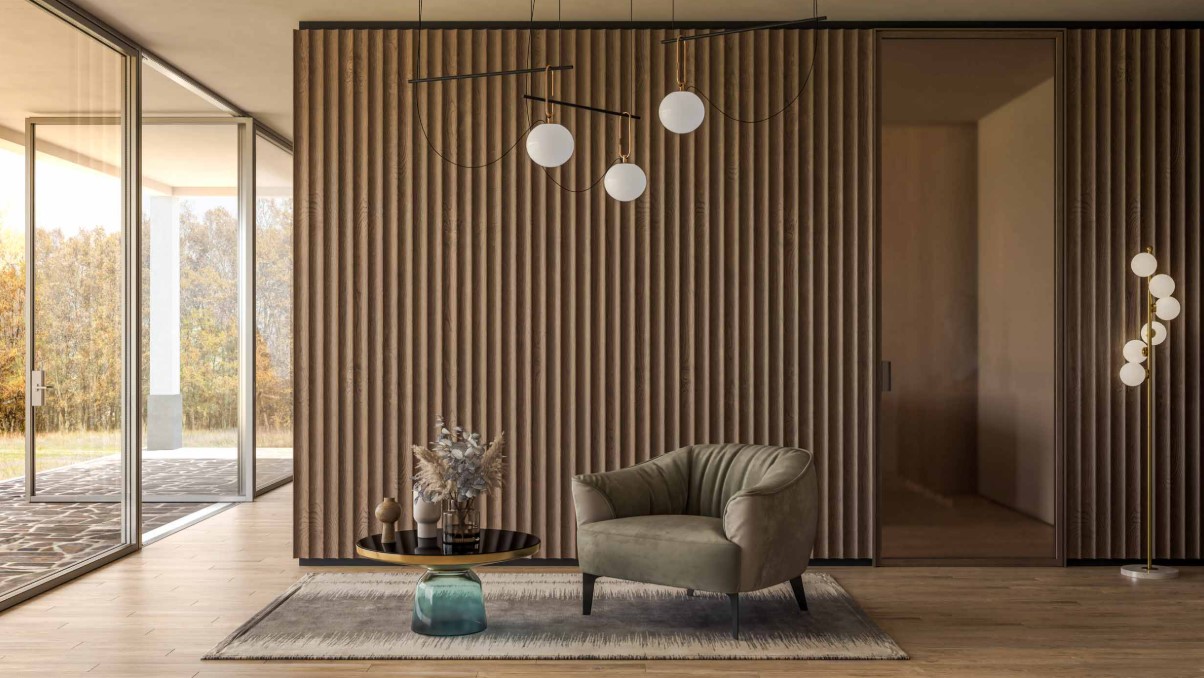
- A built-in cabinet can align with wall panels to define a zone
- A sofa can sit within a panel module rather than cutting across it
- A door should open without interfering with key furniture lines
This approach keeps circulation clear and strengthens the overall structure.
Final Thoughts
Matching doors, wall panels, and furniture is not about making everything look the same. It is about creating a system where each element follows the same logic.
Start with alignment. Then build consistency through materials, proportions, and details. Pay attention to visual weight and how the space is used.
When these decisions are made together, the result feels calm, clear, and intentional.